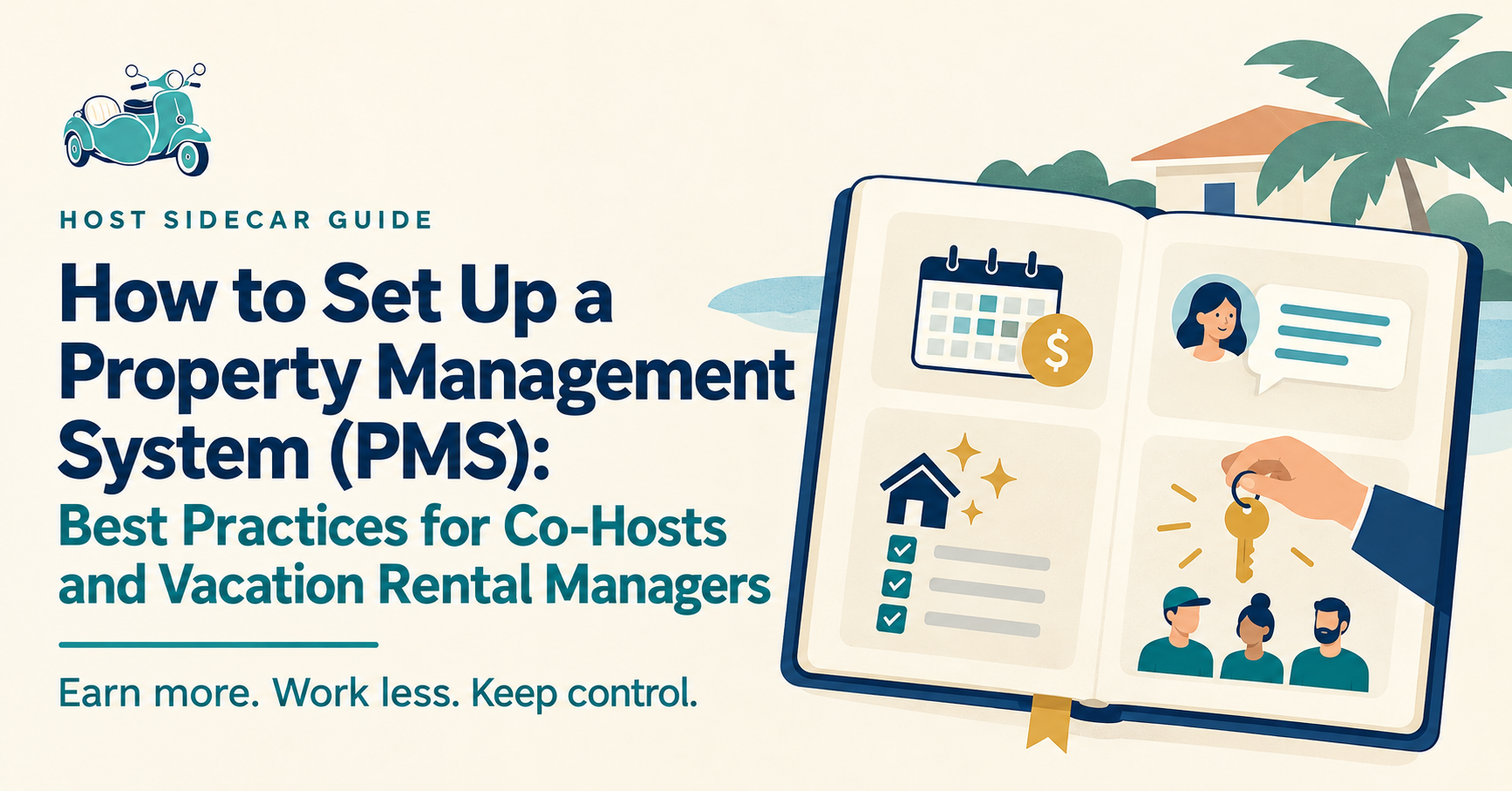
Earn more. Work less. Keep control.
A well-configured Property Management System (PMS) helps you protect booking opportunities, reduce repetitive work, and keep owners, guests, and local teams working from the same information.
But connecting your listings is only the beginning. The most useful PMS setup starts with decisions about how each property should operate.
Whether you are learning how to be a successful co-host or building a vacation rental management business, focus on these four areas before turning on automation.
1. Decide what a good booking looks like
How should you set pricing, minimum stays, and availability in your PMS?
Start with the business outcome you want. Higher occupancy, stronger nightly rates, longer stays, and fewer turnovers involve different tradeoffs. Decide which matters most for each property.
Before configuring your calendar, agree on:
- Pricing boundaries: Your pricing approach, starting rate, minimum acceptable rate, and treatment of unusually strong demand.
- Stay rules: Which stays you want to attract, when shorter gaps may become bookable, and which dates need special attention.
- Operating limits: Advance notice, booking windows, owner stays, and arrival or departure restrictions your local team can support.
- Booking authority: Which reservations can be accepted automatically and which require review.
Choose a clear source of truth for pricing and availability. If a pricing tool, PMS, and booking channel can all change a setting, document where that setting should be managed.
Why it matters: A date can be available without being commercially attractive or operationally workable. Your rules should protect earning potential while reflecting what your team can deliver.
Before activation: Review ordinary weekdays, weekends, peak dates, and short calendar gaps. Check the resulting rates, stay restrictions, and channel-specific fees.
2. Decide what guests need—and when a person should step in
What guest messages should you automate in a vacation rental PMS?
Automate predictable information. Define human follow-up for questions, exceptions, and problems.
Decide:
- Your hospitality voice: How messages should sound and whose name guests will recognize.
- Essential property facts: Verified directions, parking, access, house rules, and checkout expectations.
- Message timing: When each message becomes useful, including reservations made close to arrival.
- Human handoffs: Who handles unanswered questions, unusual requests, complaints, and urgent access issues.
Separate an inquiry, a request to book, and a confirmed reservation. An acknowledgment should never imply that a pending stay has been approved.
Review existing messages in your booking channels before enabling PMS messages, so guests do not receive duplicate or conflicting instructions.
Why it matters: Clear, timely information reduces repeat questions and helps guests arrive confidently. A named person for exceptions preserves the hospitality that makes your co-hosting service valuable.
Before activation: Walk through the guest journey using sample reservation details. Check message timing, property information, access instructions, and what happens when a guest replies.
3. Decide how a reservation becomes a guest-ready property
How do you automate cleaner scheduling without losing oversight?
A turnover notification is useful only when someone is responsible for acting on it.
Agree with your local team on:
- Turnover capacity: Whether same-day, next-day, or another cleaning schedule fits the property.
- Task ownership: The primary cleaner, backup coverage, and person responsible for confirming readiness.
- Communication: Where tasks, date changes, cancellations, and reminders should arrive.
- Completion standards: How the team confirms the property is ready and reports missing supplies, damage, or maintenance needs.
Make booking rules and guest promises match these decisions. Early check-in should require confirmed readiness when it changes the cleaning plan.
Why it matters: Reliable turnovers protect the guest experience and reduce last-minute coordination. Clear responsibilities support cleaners and vendors by giving them accurate information and a dependable contact.
Before activation: Test a new booking, changed checkout date, and cancellation. Confirm the correct people receive the latest task information and know how to raise an exception.
4. Decide who keeps control—and how you will measure success
How can a PMS help you build your co-hosting business?
Growth becomes easier when routine work follows a repeatable process and important decisions have a clear owner.
Define:
- Ownership and access: Who controls the PMS account, channel connections, property information, and integrations.
- Permissions and approvals: Who can change rates, block dates, accept exceptions, authorize refunds, or view financial information.
- Escalation and backup: Who handles urgent problems and what the team does if an integration or notification fails.
- Review responsibility: Who checks performance, maintains settings, and approves improvements.
Record a starting baseline and choose a review date. Measure all three outcomes:
Earn more: Track booking revenue alongside available nights, average nightly rate, stay length, and calendar gaps.
Work less: Track time spent on recurring administration, repeated guest questions, and manual turnover follow-up.
Keep control: Track unresolved exceptions, missed handoffs, and whether changes follow agreed approval rules.
Use comparable periods and account for seasonality when reviewing results.
Why it matters: More properties should not require you to remember every detail personally. A repeatable operating playbook helps you add capacity while retaining owner relationships, local judgment, and service standards.
Before activation: Write down the approved decisions for one property, test the connected workflows, and confirm who will review the first real bookings and turnovers.
A successful PMS setup begins with a clear property playbook. Standardize the process across your portfolio, then preserve the exceptions that make each property work.
Need help turning those decisions into working systems? Host Sidecar helps co-hosts and vacation rental managers configure and maintain pricing, calendars, guest messaging, and turnover workflows around their existing operation. Visit HostSidecar.com to discuss your current setup and where it needs attention.
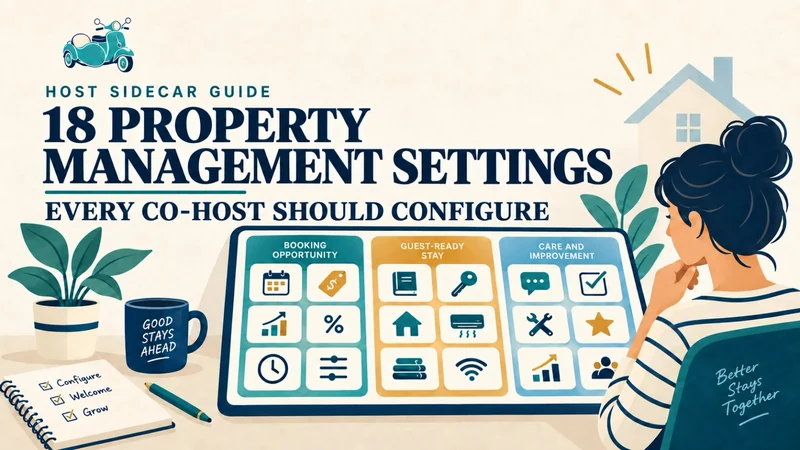
Ready to configure the details? Use the 18-setting PMS checklist after making these decisions.