
To grow a co-hosting business without multiplying admin, measure repeated work, standardize the highest-volume handoffs, and test capacity on your existing portfolio. Keep owner relationships, local teams, and approval decisions with the people responsible for them.
How to put this into practice
- Log repeat tasks and time spent during a representative week.
- Group copied messages, calendar checks, turnover reminders, and status requests.
- Fix the most frequent handoff with a trigger, owner, and exception route.
- Confirm local coverage and workload before adding another property.
Summary
- Create capacity by taking repeat coordination off the co-host’s plate.
- Review calendar rules, pricing, guest messages, and turnovers consistently.
- Keep owner relationships, local judgment, and important approvals with people.
Your owner relationships are the business
A co-host’s real value is not copying an arrival message or reminding a cleaner about a checkout. It is knowing the owner, the property, the local team, and the right call when something needs judgment.
That relationship becomes more valuable when the routine work is handled consistently. Owners see clearer follow-through. Guests receive the details they need. And the co-host has more time for the conversations and decisions that actually protect the relationship.
Revenue opportunity deserves regular attention
A co-host’s commission or management income is tied to the performance of the properties they support.
That makes small operational details financially important:
Calendar gaps and minimum-stay rules
Pricing and booking-window checks
Listing details that help a property compete
Guest communication that prevents avoidable friction
Faster, clearer turnover coordination
No single item guarantees more revenue. But leaving those details to chance can leave revenue opportunity on the table.
Put repeat work on repeat
The goal is not to put a property on autopilot or remove the co-host from the operation.
It is to stop relying on memory, copy-and-paste messages, and manual chasing for work that happens every stay.
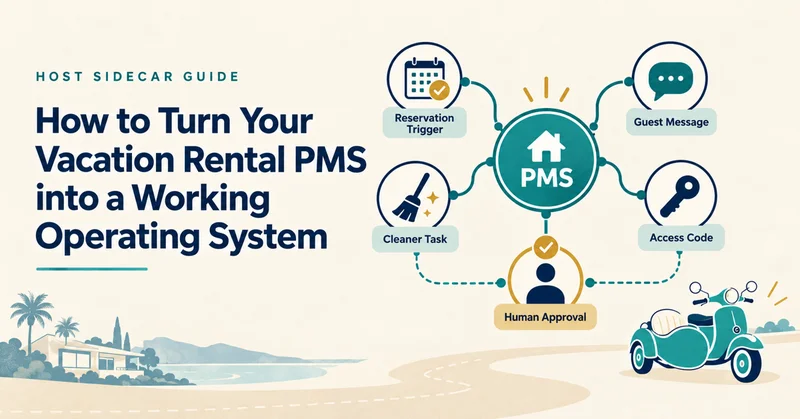
That can include property-specific guest messages, reservation-based turnover scheduling, a 24-hour turnover reminder, reservation-change routing, arrival details, and regular calendar checks.
When those tasks follow agreed rules, adding a property does not have to mean adding the same amount of administration.
Keep the decisions that need a person
Owners, cleaners, vendors, property standards, pricing boundaries, refunds, claims, emergencies, and sensitive exceptions still need human judgment.
The point of better operating support is to bring the right information to the right person sooner—so the co-host stays in charge of the work that cannot be reduced to a routine.
More capacity should not mean becoming less personal. It should mean more room to support owners well, protect revenue opportunity, and grow without carrying every routine task alone.
Try a one-week capacity check
Before adding another property, keep a simple log of repeat work for one representative week. For each task, note the property, reservation event, minutes spent, and whether it required your judgment or only current information.
- Group repeated calendar checks, copied messages, cleaner reminders, and status requests.
- Choose the most frequent handoff and define its trigger, owner, completion check, and exception route.
- Test it on the current portfolio before assuming it creates room for another home.
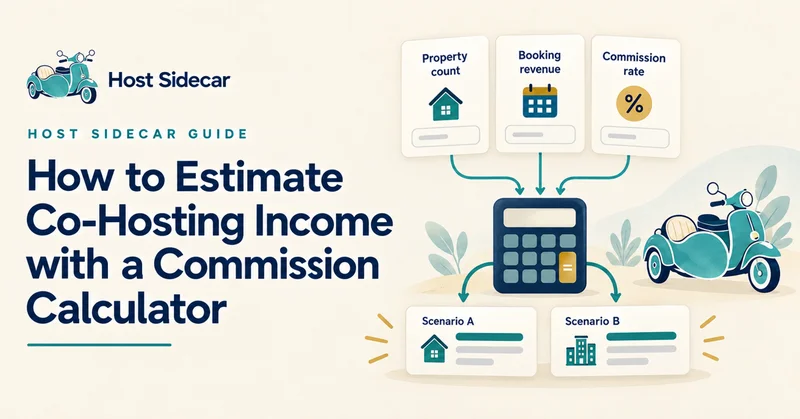
This is a planning exercise, not evidence of guaranteed time savings. Use the 18-setting PMS checklist to review the workflow and the commission calculator to model your own growth assumptions.
Frequently asked questions
How can a co-host add capacity?
Reduce repeated information handling, make task ownership visible, and use tested property workflows. Confirm the change reduces real work rather than merely adding another tool.
How do I know I am ready for another property?
Check current guest coverage, turnover reliability, unresolved issues, owner communication, and backup support. Model the new workload as well as the potential commission.